
Payment Card Information Data Security Standards (PCI DSS)
Protect cardholder data, reduce payment fraud risk and reinforce secure payment practices.
Train. Reinforce. Protect.
Traliant Learning Topics pair foundational, attorney-authored training with reinforcement content, including Micro Reels that keep key concepts fresh throughout the year. Always protected, not more time in training.
Secure payment data starts with employees
Every employee who handles payment cards plays a role in protecting customer information. A single mistake — from storing card data improperly to overlooking signs of payment terminal tampering — can expose organizations to fraud, fines and compliance risks.
Traliant's 15-minute Payment Card Industry Data Security Standards (PCI DSS) Awareness Learning Topic helps employees recognize cardholder data, follow secure payment practices, identify fraud risks and protect payment information.
Twenty role-based Micro Reels reinforce secure payment behaviors throughout the year, with separate learning tracks for frontline payment handlers and payment support, administration and operations staff.
FOUNDATIONAL TRAINING
Payment Card Information Data Security Standards (PCI DSS)
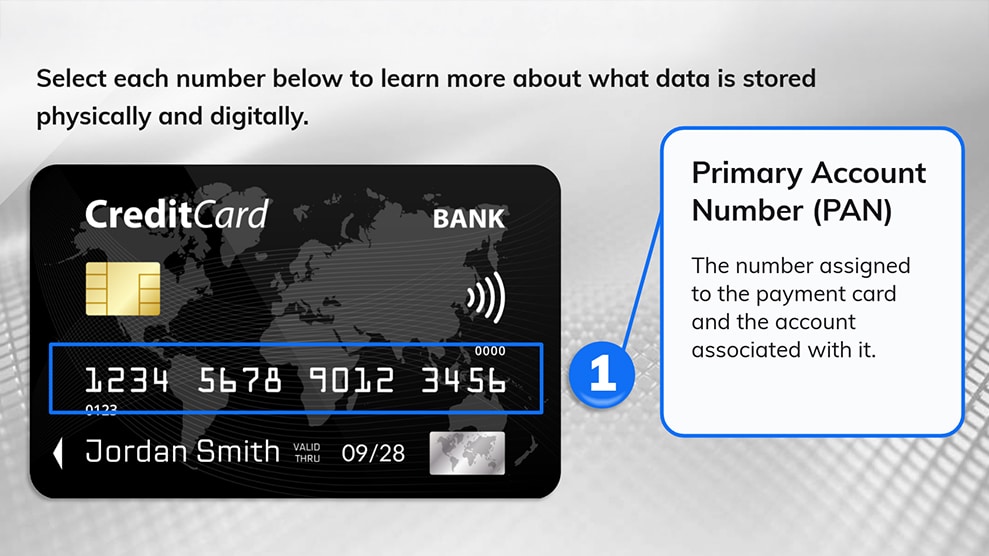
What this PCI DSS Learning Topic Covers:
Through realistic scenarios and interactive exercises, employees learn to safely handle payment card information, recognize fraud risks and follow PCI DSS 4.0.1 requirements in everyday work situations.
- What information is protected under PCI DSS
- The 12 PCI DSS 4.0.1 standards
- Secure handling of cardholder data
- Organizational policies and reporting requirements
- Multifactor authentication and other security safeguards /li>
- Identifying payment terminal tampering
- Recognizing and preventing payment card fraud
ALWAYS-ON RISK MITIGATION
A stronger compliance program with the tools to go deeper, ready when you are.
What is a Learning Topic?
A Learning Topic is everything you need to cover one subject, like preventing harassment or keeping data safe. It’s more than a single course. It pairs attorney-authored training with reinforcement tools that keep the protection going after the course ends.
How does it work?
The full course meets your requirements, giving a documented, defensible record. Reinforcement tools keep that protection working between annual trainings. Pick your Learning Topic, roll it out, and it keeps working all year.
What’s in a Learning Topic?
Reinforcement tools vary by topic, so each Learning Topic includes the mix that fits its subject.

Foundational courses
Comprehensive training written by our in-house attorneys and kept current as laws change. Produced with the quality of a TV show, so it holds attention and the lesson sticks.

Micro Reels
Short, just-in-time videos that reinforce key concepts right when employees need them most.

Refreshers
Short follow-up courses that strengthen retention between annual trainings.

Application Tools and Job Aids
Practical resources that help employees apply what they learned with confidence on the job.
What to consider when choosing the most effective Payment Card Industry Data Security Standards (PCI DSS) training

- Protect sensitive data: The PCI DSS is a set of security standards designed to protect cardholder data. Training helps to ensure that employees understand these standards and that they are following best practices for handling sensitive information.
- Reduce the risk of data breaches: Data breaches can be costly and damaging to an organization's reputation. Training can help to minimize the risk of data breaches by raising awareness of security threats and by teaching employees how to protect cardholder data.
- Comply with PCI DSS requirements: All organizations that handle payment card information are required to comply with the PCI DSS. Training helps organizations meet this requirement and avoid fines and penalties.
- Empower employees: Training provides employees with the knowledge and skills they need to protect cardholder data and to comply with PCI DSS requirements.
- Strengthen your organization's security posture: Training helps to build a strong security culture, making it more difficult for cybercriminals to succeed in stealing cardholder data.
- Reduce the risk of financial losses: Data breaches can result in significant financial losses for organizations. Training can help to minimize these risks.
- Primary account number (PAN)
- Cardholder name
- Expiration date
- Service code
- Build and Maintain a Secure Network: Install and maintain a firewall configuration to protect cardholder data.
- Protect Cardholder Data: Do not use vendor-supplied defaults for system passwords and other security parameters.
- Protect Stored Cardholder Data: Encrypt transmission of cardholder data across open, public networks.
- Encrypt Transmission of Cardholder Data Across Open, Public Networks: Use strong cryptography and security protocols.
- Use and Regularly Update Anti-virus Software or Programs: Protect all systems against malware and regularly update anti-virus software.
- Develop and Maintain Secure Systems and Applications: Develop secure systems and applications and keep them up to date.
- Restrict Access to Cardholder Data: Limit access to cardholder data by business need-to-know.
- Identify and Authenticate Access to System Components: Assign a unique ID to each person with computer access.
- Restrict Physical Access to Cardholder Data: Restrict physical access to cardholder data.
- Track and Monitor All Access to Network Resources and Cardholder Data: Track and monitor all access to network resources and cardholder data.
- Regularly Test Security Systems and Processes: Regularly test security systems and processes.
- Maintain a Policy That Addresses Information Security for All Personnel: Maintain a policy that addresses information security for all personnel.
- Use strong passwords and multi-factor authentication: Strong passwords and multi-factor authentication add extra layers of security to accounts and devices that access cardholder data.
- Be cautious about phishing attacks: Be wary of emails, texts, or phone calls that ask for sensitive information.
- Securely store payment card information: Only store cardholder data that is absolutely necessary, and store it securely in a manner that complies with PCI DSS requirements.
- Regularly monitor for suspicious activity: Pay attention to unusual activity on accounts that handle cardholder data.
- Stay informed about security threats: Keep up-to-date on the latest cybersecurity threats and vulnerabilities.
KEY FEATURES
Why you'll love our training
It’s time to embrace a new era of online training with a valued partner who will ensure seamless implementation, a truly enjoyable learning experience, and courses with continuous compliance you can trust.

Compliance expertise
Traliant's in-house legal expertise ensures training is accurate and kept up-to-date with any regulatory changes.

Accessible to users with disabilities
Traliant provides an inclusive experience for all users, including those with disabilities, by going beyond Section 508-C standards and offering WCAG 2.1/2.2 AA

Story-based learning
Our story-based approach blends leading instructional design with Hollywood talent to produce engaging, interactive and nuanced training.

Administration
Traliant makes it simple to roll out training to your workplace and provide technical support directly to your employees at no additional cost.

Customizations
Tailor courses to include your logo, relevant policies, workplace images, and more. Traliant can even customize the course with scenarios that take place in your own workplace environment.

Translations
Training is available in English, Spanish and is supported in over 100 languages.
COMPLIANCE EXPERTISE
Your partner in training compliance

Uniquely qualified in-house compliance team
Our exceptional in-house Compliance Advisory Team is led by Michael Johnson, Chief Strategy Officer and former U.S. Department of Justice attorney who has provided training and guidance to organizations like the Equal Employment Opportunity Commission, Google, the United Nations, and the World Bank.

Keeping you compliant, effortlessly
Keeping up with the complex web of employment laws — especially if your workforce spans multiple states — can be tricky. That’s why we offer a streamlined training solution that ensures you stay compliant with federal, state, and local regulations, so you can focus on what matters most: your team.

Simplifying your policies and handbooks
Crafting an employee handbook that meets legal standards can be daunting. Let us ease the burden. We help you navigate regulatory changes to ensure your policies and handbooks not only comply with the law but also reflect industry best practices.