
Unconscious Bias Training for Employees
Raise employee awareness of unconscious bias to foster positive workplace decisions, interactions and reduce negative interference.
Train. Reinforce. Protect.
Traliant Learning Topics pair foundational, attorney-authored training with reinforcement content, including Micro Reels that keep key concepts fresh throughout the year. Always protected, not more time in training.
Objectivity leads to better decisions
Traliant’s Objectivity in the Workplace Learning Topic helps employees understand how unconscious biases can shape workplace perceptions, interactions and decisions. Through practical strategies, employees learn to recognize potential bias and make more objective, inclusive decisions in their day-to-day work.
The course begins with a short knowledge check. Employees who demonstrate that they already understand certain concepts can test out of that content, reducing time in training while focusing their attention on areas where they need additional learning.
Short, two-minute video Micro Reels reinforce key actions throughout the year, helping employees apply what they learned and keep objective decision-making top of mind.
FOUNDATIONAL TRAINING
Unconscious Bias Training in the Workplace
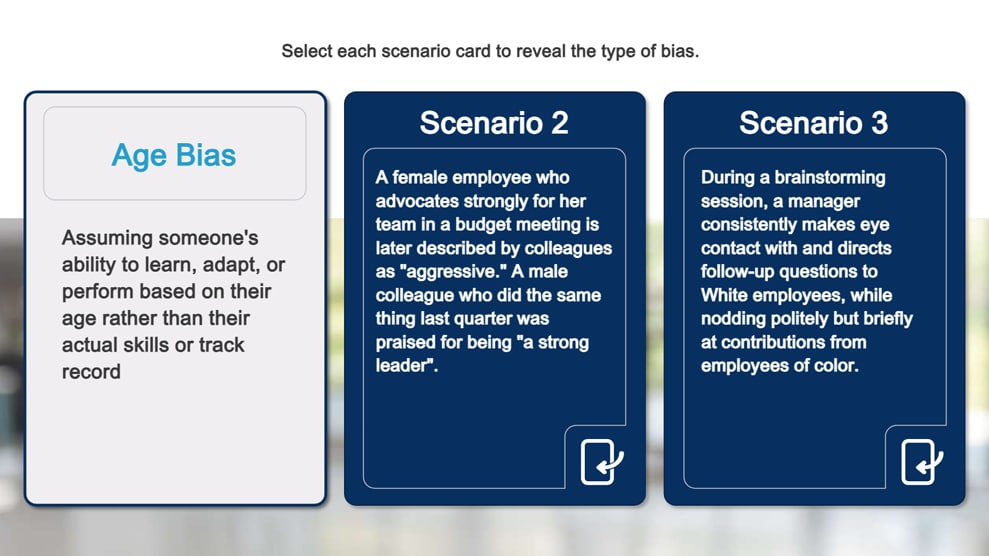
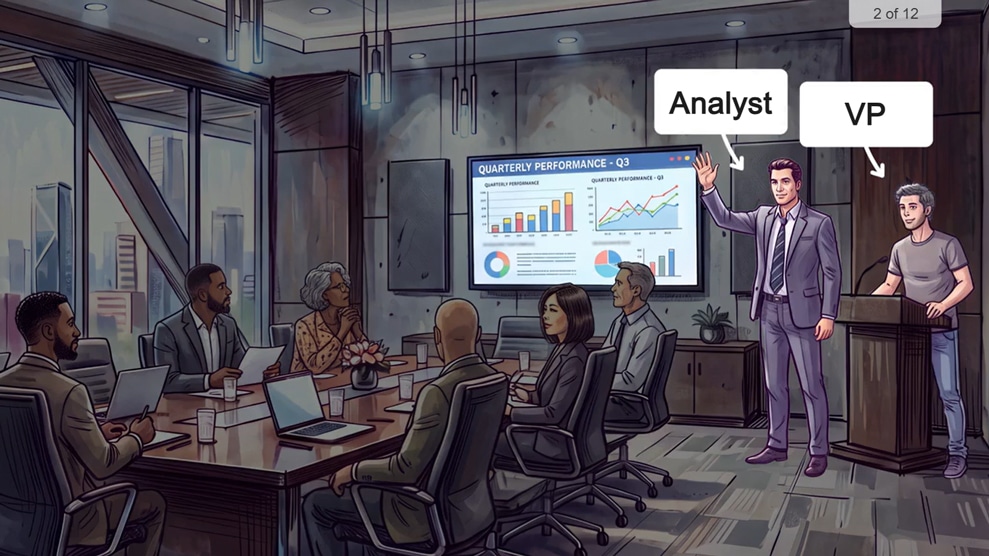
What this Learning Topic covers:
- What is unconscious bias?
- Implicit bias
- Fast vs slow brain
- Why do biases exist?
- Intentional vs unintentional discrimination
- How do biases develop?
- Hidden bias
- Other types of biases
- Impact of bias on organizational effectiveness
- Benefits of a diverse and inclusive workplace
- Steps employees can take to strengthen objectivity
- How to respond when confronted with bias
ALWAYS-ON RISK MITIGATION
A stronger compliance program with the tools to go deeper, ready when you are.
What is a Learning Topic?
A Learning Topic is everything you need to cover one subject, like preventing harassment or keeping data safe. It’s more than a single course. It pairs attorney-authored training with reinforcement tools that keep the protection going after the course ends.
How does it work?
The full course meets your requirements, giving a documented, defensible record. Reinforcement tools keep that protection working between annual trainings. Pick your Learning Topic, roll it out, and it keeps working all year.
What’s in a Learning Topic?
Reinforcement tools vary by topic, so each Learning Topic includes the mix that fits its subject.

Foundational courses
Comprehensive training written by our in-house attorneys and kept current as laws change. Produced with the quality of a TV show, so it holds attention and the lesson sticks.

Micro Reels
Short, just-in-time videos that reinforce key concepts right when employees need them most.

Refreshers
Short follow-up courses that strengthen retention between annual trainings.

Application Tools and Job Aids
Practical resources that help employees apply what they learned with confidence on the job.
Frequently Asked Questions (FAQs) about Unconscious Bias training
Unconscious bias training is designed to help employees understand the nature of unconscious bias, how it can affect their decisions and interactions, and how to mitigate its impact in the workplace. This training is crucial for building a more diverse, equitable, and inclusive workplace.
Read Traliant’s article to learn more about what questions unconscious bias training should answer . Many organizations utilize unconscious bias training online due to its cost-effectiveness and flexibility—benefits that are particularly valuable for companies with dispersed workforces. While often aligned with broader efforts like diversity, equity and inclusion (DEI) initiatives, unconscious bias training can also stand alone as a proactive step toward fostering fairer decision-making and workplace interactions. Increasingly, many organizations are offering these courses to equip employees with practical tools for recognizing and mitigating bias in everyday situations.
- Gender: Assuming that there are certain tasks or roles that women or men are better suited to accomplish successfully.
- Race: Making assumptions about a person's abilities or work ethic based on their race or ethnicity.
- Age: Assuming older workers are less adaptable or innovative than younger ones.
- Disability: Assuming that someone with a disability is less capable or productive than someone without a disability.
- Being mindful of their assumptions and stereotypes.
- Seeking out diverse perspectives and experiences.
- Challenging stereotypes and biases when they hear them.
- Thinking critically about their own decision-making processes.
KEY FEATURES
Why you'll love our training
It’s time to embrace a new era of online training with a valued partner who will ensure seamless implementation, a truly enjoyable learning experience and courses with continuous compliance you can trust

Compliance expertise
Traliant's in-house legal expertise ensures training is accurate and kept up-to-date with any regulatory changes.

Accessible to users with disabilities
Traliant provides an inclusive experience for all users, including those with disabilities, by going beyond Section 508-C standards and offering WCAG 2.1/2.2 AA.

Story-based learning
Our story-based approach blends leading instructional design with Hollywood talent to produce engaging, interactive and nuanced training.

Administration
Traliant makes it simple to roll out training to your workplace and provide technical support directly to your employees at no additional cost.

Customizations
Tailor courses to include your logo, relevant policies, workplace images, and more. Traliant can even customize the course with scenarios that take place in your own workplace environment.

Translations
Training is available in English, Spanish and is supported in over 100 languages.
COMPLIANCE EXPERTISE
Your partner in training compliance

Uniquely qualified in-house compliance team
Our exceptional in-house Compliance Advisory Team is led by Michael Johnson, Chief Strategy Officer and former U.S. Department of Justice attorney who has provided training and guidance to organizations like the Equal Employment Opportunity Commission, Google, the United Nations, and the World Bank.

Keeping you compliant, effortlessly
Keeping up with the complex web of employment laws — especially if your workforce spans multiple states — can be tricky. That’s why we offer a streamlined training solution that ensures you stay compliant with federal, state, and local regulations, so you can focus on what matters most: your team.

Simplifying your policies and handbooks
Crafting an employee handbook that meets legal standards can be daunting. Let us ease the burden. We help you navigate regulatory changes to ensure your policies and handbooks not only comply with the law but also reflect industry best practices.